
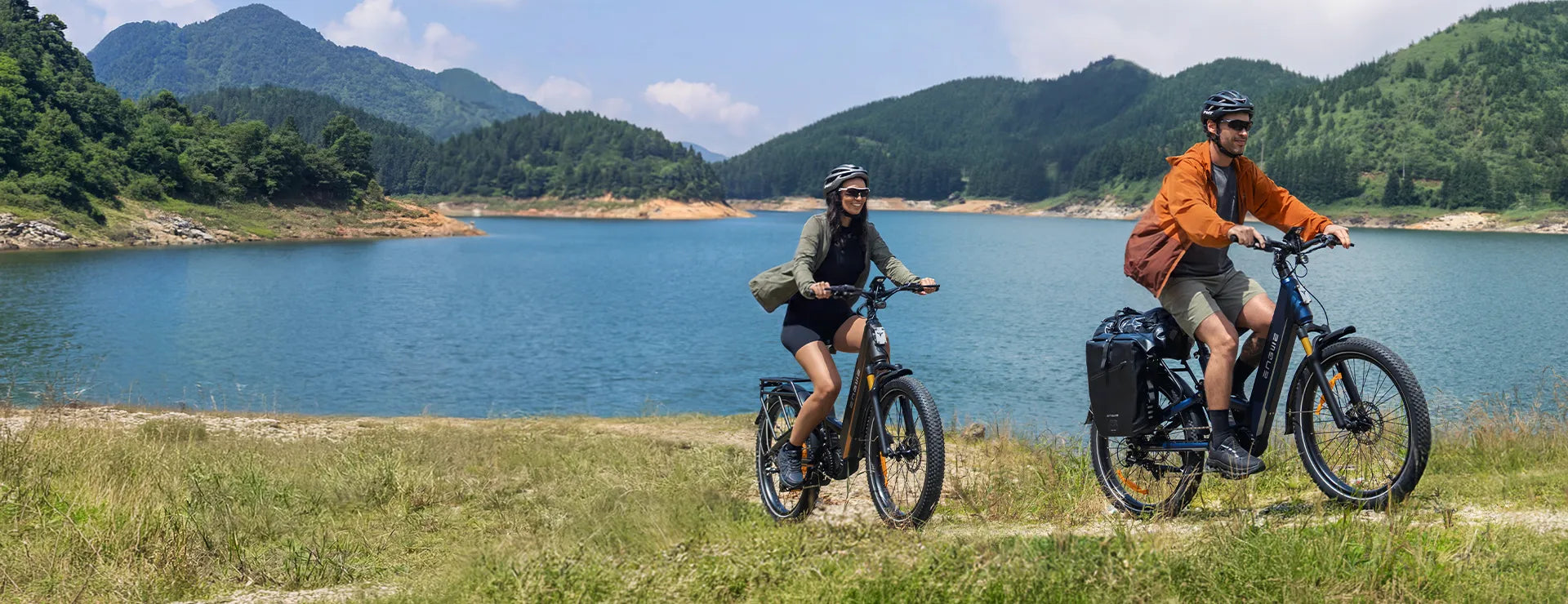
ENGWE sells electric bikes for several distinct jobs rather than building its catalog around a single frame. The German storefront currently groups models into city, folding, cargo and fat-tire families, with important differences in motor placement, sensors, suspension, tire volume, carrying capacity and overall weight. That breadth is useful, but it makes model selection more important than the brand name alone.
This research-based ENGWE review examines the official German storefront, catalog, brand story and support policies. It does not include independent riding, range, braking or durability testing. Published motor, torque, range and load figures should be treated as manufacturer specifications, and buyers should verify the exact model configuration and local rules before ordering.
What Is ENGWE?
ENGWE is an electric-bike brand whose official history describes its origins in a project by three cycling enthusiasts and a later focus on functional, accessibly positioned e-bikes. The current German site confirms that `de.engwe.com` is an official regional storefront.
The catalog extends from compact folding bikes to step-through commuters, cargo-oriented platforms and larger all-terrain designs. ENGWE's common thread is not one riding style; it is a broad use of electric assistance, integrated batteries and practical equipment across several frame formats.
The brand's own story and product pages use ambitious language about mobility and performance. Those statements explain positioning, but they are not independent proof of real-world range, reliability or ride quality. A sound purchase decision starts with the exact model's geometry, mass, components and service terms.
What Does ENGWE Sell?
The official German catalog organizes bikes by intended use and construction. City models emphasize everyday roads, commuting and practical equipment. Folding models use compact hinges or smaller wheels to improve storage, although many remain too heavy for frequent carrying. Fat-tire models use high-volume tires and often substantial frames for mixed surfaces. Cargo-oriented models add racks, extended rear structures or step-through layouts for carrying loads.
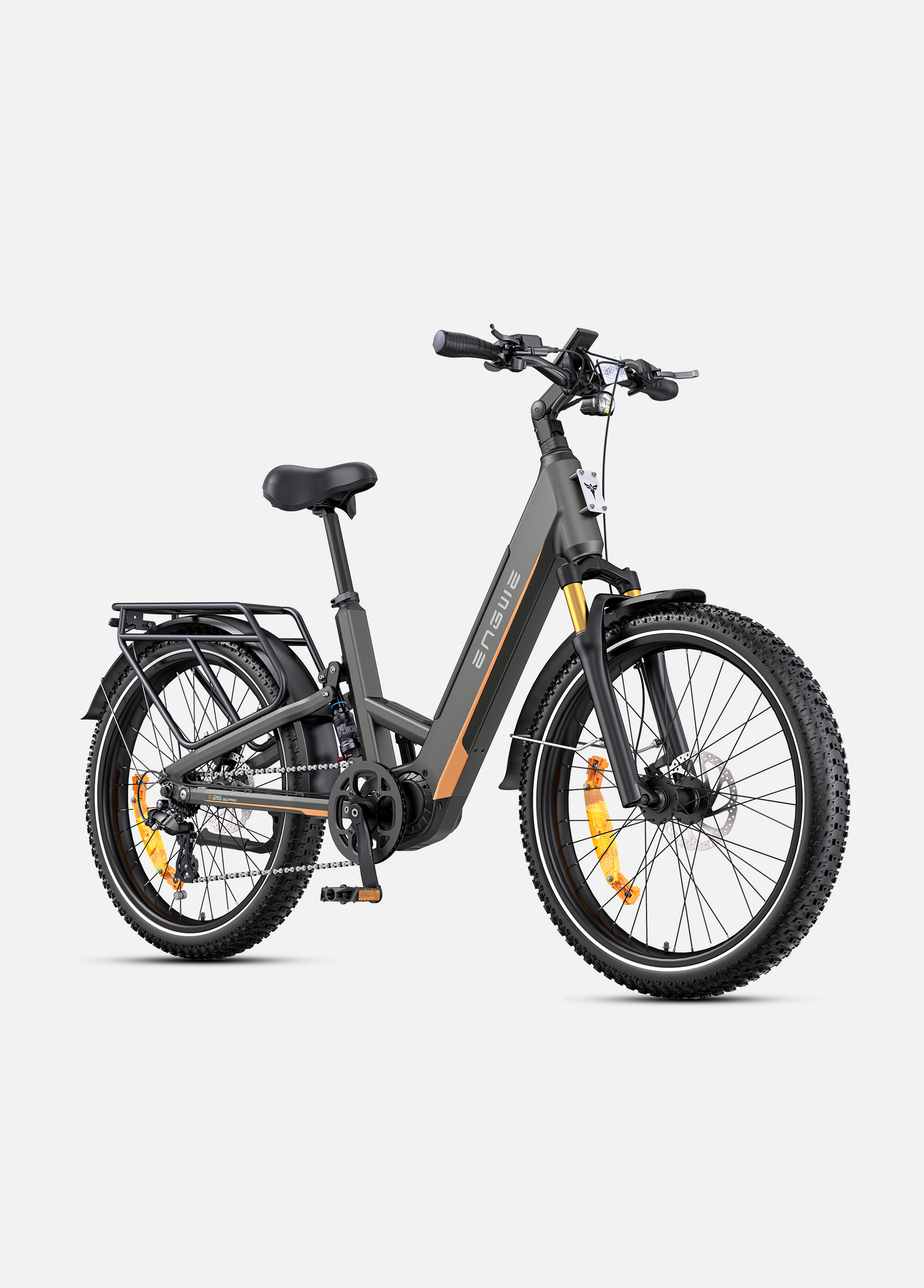
The range also includes conventional non-folding bikes with mid-drive motors, full suspension and broader all-road tires. The E26 3.0 Pro is one example: ENGWE describes it as a full-suspension eSUV with a 250W mid-drive motor, a torque sensor and 26 × 3.0-inch tires. It demonstrates how the range now reaches beyond the brand's better-known folding formats.
Accessories and replacement items are part of the storefront as well. Compatibility is model-specific, so a battery, rack, seat, charger or bag should be matched by exact model and generation rather than by appearance.
What Distinguishes the ENGWE Range?
Choice is ENGWE's clearest advantage. Shoppers can compare hub-drive and mid-drive systems, folding and fixed frames, compact and full-size wheels, step-through and high-step layouts, and different levels of suspension. That makes the brand relevant to more than one use case.
Several current models use torque sensors, which measure pedaling input and adjust assistance accordingly. Others use cadence-based or model-specific control strategies. A torque sensor can support more proportional assistance, but the sensor type alone does not establish smoothness, efficiency or comfort; controller tuning and the whole drivetrain matter.
The catalog also spans narrow urban tires and wider fat or all-road tires. Wider tires can provide more air volume and surface contact, but they add rolling resistance and mass. Folding hardware helps with storage dimensions, yet a folding bike weighing around 30 kilograms is still difficult to carry. Buyers should treat every feature as part of a system rather than as an automatic upgrade.
Motor, Battery and Range Claims
ENGWE's German-market product pages commonly list EU-oriented 250W motor ratings, but torque, peak output and motor placement vary. Mid-drive motors send assistance through the bicycle drivetrain, while hub motors act at a wheel. Neither layout is universally better: mid-drives can use the bike's gearing effectively, while hub systems can be mechanically simpler from the rider's perspective.
Battery capacities and claimed ranges also vary substantially. Range figures depend on assistance level, rider and cargo mass, terrain, wind, temperature, tire pressure, acceleration and battery condition. ENGWE's maximum claims are useful for comparing official specifications, but they should not be read as guaranteed commuting distance.
Charging time matters for daily ownership. Some newer models list faster chargers, while other models require longer charging windows. Buyers should confirm whether the battery is removable, where it can safely be charged and whether a replacement is available for the exact generation.
Folding, Fat-Tire and Cargo Choices
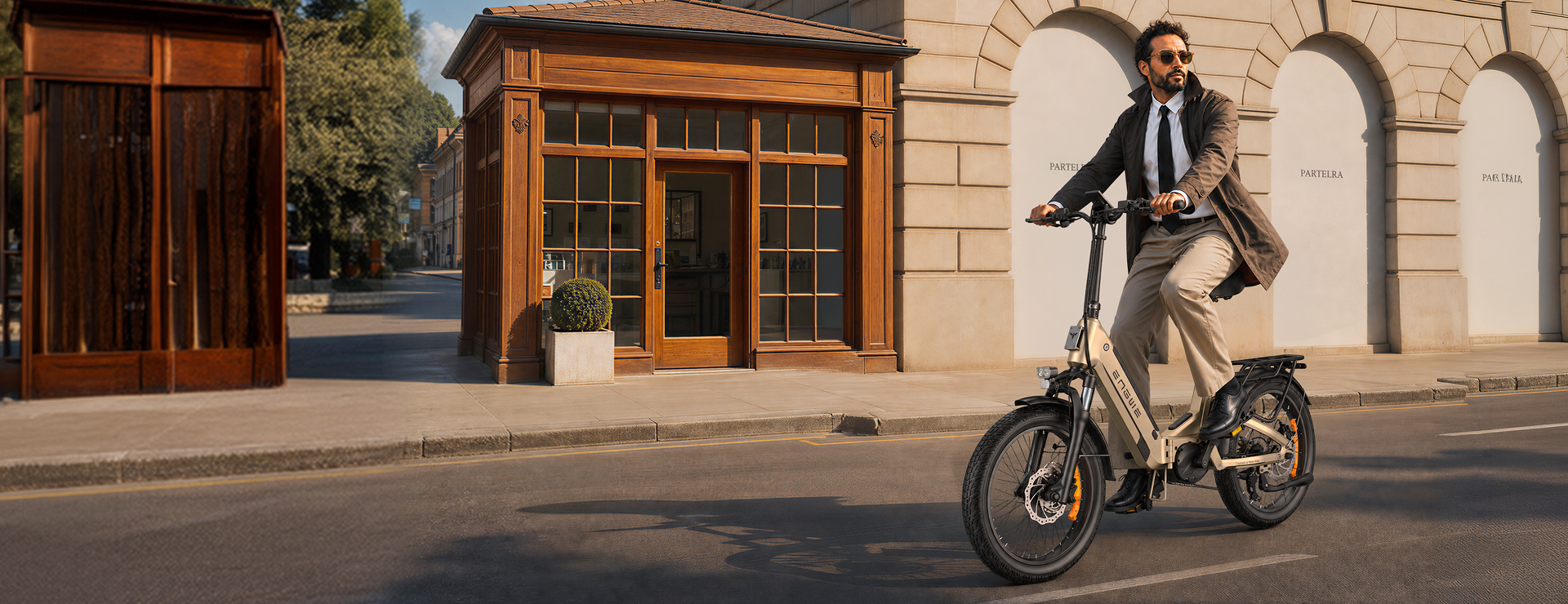
Folding ENGWE bikes may suit owners with limited storage, motorhomes or cars large enough for a folded frame. Check folded dimensions and weight together. A compact footprint helps in a garage or trunk; it does not make a heavy e-bike comfortable to lift up stairs.
Fat or all-road tires can make uneven surfaces feel less sharp and can suit riders who value stability, but they affect efficiency, replacement cost and maneuverability. Tire labels such as "all-terrain" do not remove the need to respect local access rules or the bike's mechanical limits.
Cargo models deserve their own calculation. The maximum payload must account for rider, luggage and accessories, and the rack may have a separate limit. Loaded-bike braking, parking and balance require more attention than the headline motor figure.
How to Choose an ENGWE E-Bike
Start with the route. A mostly paved commute favors predictable handling, appropriate lighting, practical fenders and a manageable bike size. Mixed surfaces may justify larger tires and suspension. Heavy cargo changes the priorities toward frame capacity, rack limits, brakes and low-speed control.
Next, evaluate fit. Stated rider-height ranges are only a first screen. Standover height, saddle adjustment, reach, handlebar position and step-through clearance determine whether the bike can be controlled comfortably. A local test ride is valuable when possible.
Then assess storage and transport. Record the bike's assembled weight, battery weight, overall length and folded dimensions when applicable. Think through every doorway, stair, elevator, rack and vehicle involved in normal use. Many feature-rich e-bikes are closer to small vehicles than portable bicycles.
Finally, compare ownership details: brake type, tire size, drivetrain, charger, replacement parts, return cost and access to qualified service. A model with the strongest specification sheet may be a poor match if local repair support or secure storage is limited.
Pros and Cons
ENGWE's strengths are catalog breadth, multiple frame and motor formats, detailed model pages and practical choices for commuting, compact storage and load carrying. The trade-offs are equally model-dependent: some bikes are heavy, maximum range figures require cautious interpretation, large tires can increase maintenance cost, and return or service logistics can be significant for a bulky e-bike.
Things to Consider Before Buying
Confirm the legal configuration for the country and intended roads. Motor rating, assistance cutoff, throttle behavior, lighting and equipment rules can differ by jurisdiction. A product page's compliance claim should be checked against the exact variant being purchased.
Read the return conditions before assembly or use. ENGWE's German policy describes a 30-day request period, strict condition and packaging requirements, a low displayed-distance threshold, prior authorization and potential fees for non-defective returns. Because an e-bike is costly to ship, this policy is a meaningful part of the buying decision.
Support and warranty terms can vary by model and component. Keep the invoice, serial information, packaging and photos of delivery condition. Confirm current coverage on the exact product page rather than assuming every ENGWE bike has identical protection.
Who Is ENGWE Best For?
ENGWE may suit shoppers who want to choose among several e-bike formats within one brand and are willing to compare specifications carefully. It is especially relevant to commuters, leisure riders, owners seeking folding storage and buyers who need step-through or cargo-oriented options.
The brand may also appeal to specification-focused shoppers who value high-capacity batteries, wider tires, suspension or app-connected features on selected models. Those buyers should still prioritize fit, local compliance and after-sales logistics over the longest range or highest torque number.
Who May Prefer Alternatives?
Riders who want the lightest possible bike for stairs or public transport may prefer a specialist lightweight brand. Buyers who need extensive dealer-based fitting and workshop support may favor a brand with a strong nearby retail network.
Cyclists seeking a traditional, non-electric bicycle feel may prefer a lighter platform with a smaller battery and narrower tires. Anyone who cannot store an e-bike securely or handle return freight should resolve those constraints before ordering online.
Ways to Save
The owner supplied the coupon the supplied coupon - 10% OFF and the deal E26 3.0 Pro - €2,099 → €1,899 (~9.5% OFF). No expiration, stacking rule, eligibility condition or other restriction was supplied. No other promotion found during research is included here.
Pros
- Broad official range spanning city, folding, cargo and fat-tire e-bike formats.
- Multiple motor, sensor, frame and suspension configurations support different use cases.
- Official product pages generally publish detailed weights, dimensions and component specifications.
- German storefront provides regional support, return and shipping documentation.
Cons
- Several feature-rich models are heavy even when their frames fold.
- Maximum range and performance figures are manufacturer claims that vary with riding conditions.
- Model and generation differences make accessory and replacement-part compatibility important.
- Returning a bulky e-bike can involve strict condition requirements and material fees.
Final Verdict
ENGWE's strongest quality is the breadth of its e-bike catalog. The official German store gives shoppers meaningful choices among city, folding, cargo, fat-tire and full-suspension designs, supported by increasingly detailed product specifications. That range can produce a good match when the buyer begins with route, fit, storage and service needs.
The brand is less suitable for quick comparison by headline numbers alone. Weight, sensor type, frame format, tire choice, real charging routine and return logistics can matter more than the largest claimed range. ENGWE is worth considering for buyers prepared to evaluate the exact model as a complete ownership package.
FAQ
What kind of company is ENGWE?
ENGWE is an electric-bike brand with an official catalog covering city, folding, cargo, fat-tire and other electrically assisted bike formats.
Is de.engwe.com an official ENGWE website?
Yes. ENGWE's official seller-warning page lists the German regional storefront as an authorized official site.
What types of e-bikes does ENGWE sell?
The current German store includes city bikes, folding bikes, cargo-oriented models, fat-tire bikes and fixed-frame bikes with different motor, battery and suspension configurations.
Are all ENGWE bikes foldable?
No. Some models fold, while others use fixed full-size frames. Check the exact product specification rather than assuming folding capability from the brand.
How should shoppers compare ENGWE range claims?
Use published range as a manufacturer comparison point, then allow for rider mass, cargo, terrain, weather, tire pressure, assistance level and battery condition. It is not a guaranteed distance.
What should buyers check before ordering?
Confirm fit, assembled weight, storage, legal configuration, tire size, brake type, battery and charger details, service access, warranty coverage and return costs for the exact model.
Does this review include hands-on riding?
No. This is a research-based Brand Review using ENGWE's official German website, product catalog, brand information and support policies.
What owner-supplied savings are available?
The supplied coupon is the supplied coupon - 10% OFF, and the supplied E26 3.0 Pro deal is €2,099 to €1,899, described as approximately 9.5% off. No additional condition was supplied.