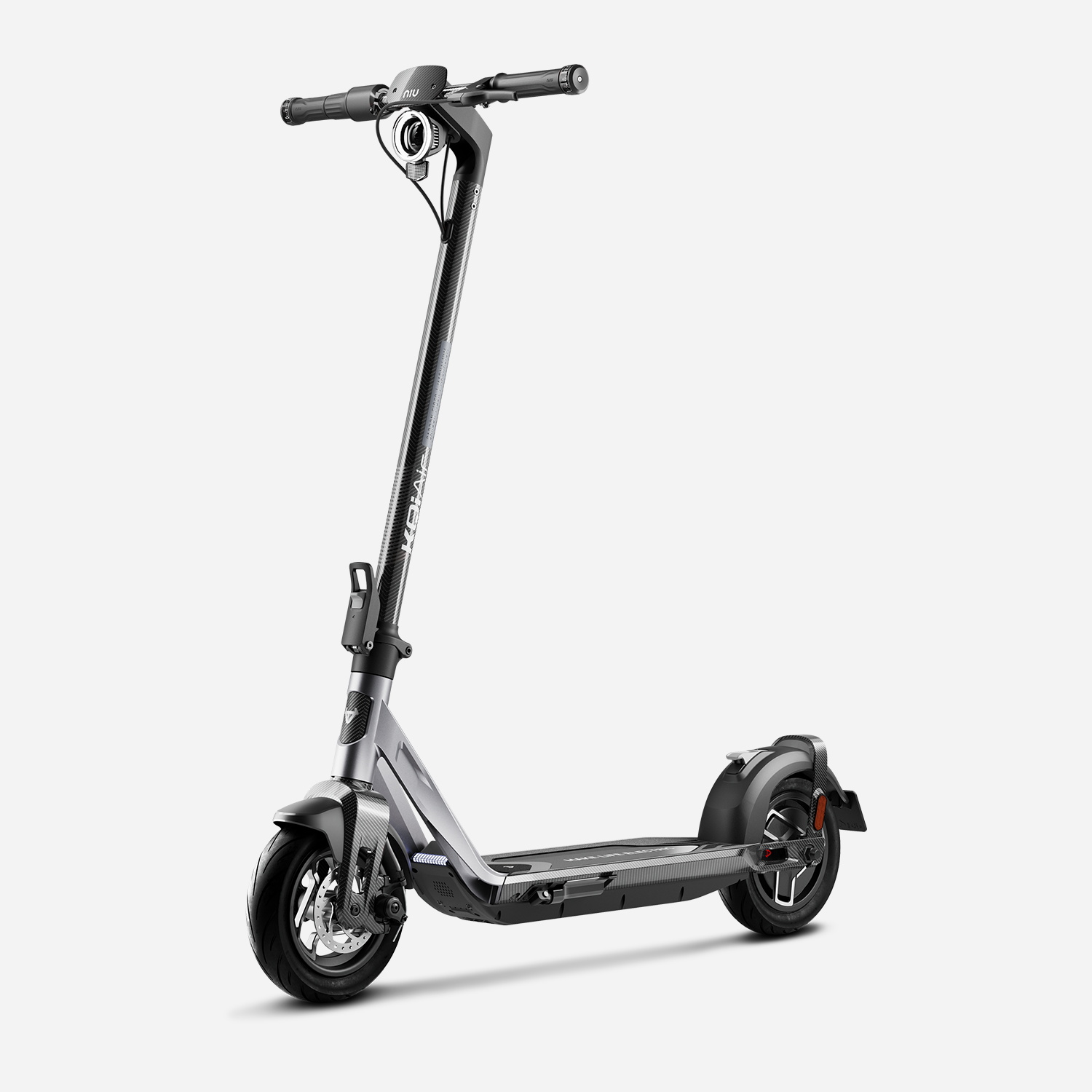


NIU is best known internationally for smart electric mopeds, but its official US store tells a narrower story. There, the brand concentrates on KQi electric kick scooters, a small line of BQi electric bikes, and the chargers, tires and accessories that keep them running. The range is organized clearly enough to compare quickly, yet the models differ in ways that matter far more than a headline speed figure: weight, suspension, tire type, folding design and ownership terms.
This NIU review is research-based. It draws on NIU's official US store, product pages, FAQ, warranty terms and company information. It does not include hands-on riding, range or durability testing. Speed, range, hill-climbing and battery-life figures below are NIU's published claims, and real-world results vary with rider weight, terrain, temperature, tire pressure and riding mode.
What Is NIU?
NIU is the consumer brand of NIU Technologies. According to NIU's official company page, the business was founded in Beijing in 2014 and has been listed on Nasdaq under the ticker NIU since 2018. Globally, NIU sells electric mopeds and motorcycles alongside what it calls micromobility: KQi kick scooters and BQi e-bikes.
NIU presents itself as a smart-mobility company rather than a simple scooter assembler. Its official materials highlight in-house battery management, its own powertrain and controller technology, and a companion app for battery status, riding statistics and selected settings. NIU also says its vehicles are ridden in more than 50 countries. Those are company statements, but they explain why app features appear so often in NIU's scooter listings.
For US shoppers, NIU's US website points to the official NIU online store for its KQi scooters. That store ships within the contiguous United States and publishes its own warranty, return and support policies.
What Does NIU Sell in the US?
The core of the store is the KQi electric kick-scooter family. At the time of research, NIU's electric-scooter collection spans five tiers:
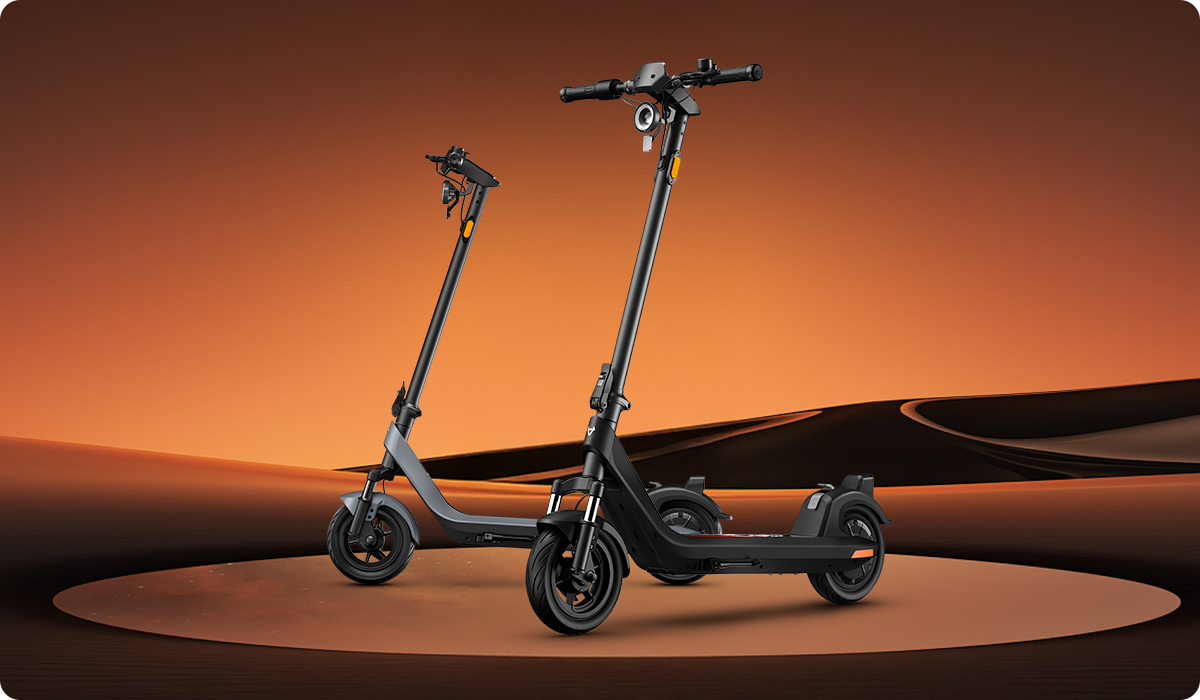
- KQi1 Pro: the entry model, with 8.5-inch solid tires, a front drum brake plus rear regenerative braking, and NIU-listed figures of 15.5 mph and up to 14.3 miles of range.
- KQi 100 series (KQi 100P and KQi 100F): front dual-spring suspension and 9.5-inch pneumatic tires, with NIU-listed figures of 17.4 mph and up to 18 miles. The 100F adds a foldable handlebar.
- KQi 200 series (KQi 200P and KQi 200F): front suspension and 10-inch tubeless pneumatic tires, with NIU-listed figures of 20 mph and up to 33.6 miles. The 200F adds a foldable handlebar.
- KQi 300 series (KQi 300P and KQi 300X): NIU's all-terrain suspension models, with 10.5-inch tubeless tires, front and rear disc brakes plus a rear electric brake, and NIU-listed ranges of up to 30 miles for the 300P and 37.3 miles for the 300X.
- KQi Air series (KQi Air and KQi Air X): carbon-fiber scooters that NIU lists at 26.2 lb and 25.8 lb respectively, with a 20 mph top speed, 700W peak power and 9.5-inch tubeless tires.
The e-bike line is smaller. The BQi-C3 Pro is a city-oriented e-bike with swappable twin 480Wh batteries, a Gates carbon belt drive, pedal, throttle and pedal-assist modes, and an NIU-listed range of up to 90 miles. The BQi Fat Tire 300 is an off-road-oriented fat-tire e-bike offered in step-over and step-through frames, with a 750W rated motor, a 48V 16Ah battery, a lockable 80mm front fork, a Shimano 8-speed drivetrain, front and rear hydraulic disc brakes, a rear rack and an NIU-listed range of up to 50 miles.
Around the vehicles, NIU sells series-specific chargers and replacement tires, phone holders, a helmet, e-bike parts such as batteries, brake pads and inner tubes, and NIU-branded gear.
How to Read NIU's Scooter Ladder
The KQi range works like a ladder of trade-offs rather than a simple good-better-best list.
Moving up from the KQi1 Pro through the 100, 200 and 300 series adds battery capacity, larger tires and more substantial suspension. Higher tiers also carry higher published range figures, although the KQi 300P's 30-mile figure sits below the KQi 200 series' 33.6 miles. The cost is weight: NIU lists the KQi 100P at 38.1 lb, the KQi 200F at 44.1 lb and the KQi 300X at 48.7 lb, each including the battery. For a rider who lifts a scooter onto a train or up a flight of stairs every day, those extra pounds can matter more than extra range.
The KQi Air series breaks that pattern. Its carbon-fiber construction brings the listed weight of the KQi Air down to 26.2 lb while keeping a 20 mph top speed and a range figure in the same bracket as heavier models. The trade-off is comfort hardware: the KQi Air relies on 9.5-inch tubeless tires, and NIU lists no suspension for it.

The F versions of the KQi 100 and KQi 200 add a foldable handlebar. NIU lists the KQi 200F at 6.9 inches wide with the handlebar folded, which is relevant for narrow storage spaces, car trunks and crowded transit.
Braking changes across the range as well. The KQi1 Pro, KQi 100 and KQi 200 pair a front drum brake with rear regenerative braking, the KQi Air uses a front disc brake with regenerative braking, and the KQi 300 series combines front and rear disc brakes with a rear electric brake. NIU publishes a stopping distance of 14.1 feet or less for the KQi 200 models, measured under its own conditions at 12.4 mph with a 265 lb load on a flat road. That is a manufacturer figure, not an independent braking test.
What Stands Out About NIU?
Connected features are part of the product. Many KQi listings describe Bluetooth app functions such as locking, riding statistics, speed customization, cruise control and a charging limit intended to help preserve the battery. The KQi Air also offers NFC unlocking, and its listing includes over-the-air updates among its app features. NIU's FAQ notes that only one app account can be linked to a scooter and that KQi riders unlock top speed by pairing the scooter with the app and completing a new-rider tutorial. Buyers who want a scooter that works fully without a phone should keep that dependency in mind.
Specifications are published in useful detail. NIU's product pages list battery capacity in watt-hours, vehicle weight including the battery, tire size and type, hill-climb rating and brake layout. Some add certification and load details; the KQi Air page, for example, lists UL 2272 certification and a 265 lb maximum rider weight. That makes like-for-like comparison easier, although range and hill-climb figures remain manufacturer claims.
Parts support is visible. The store lists replacement tires for each KQi series and dedicated chargers, including one charger shared by the KQi Air and KQi 300 series. NIU's FAQ says owners can buy tires to install themselves or send the scooter in for a paid tire replacement, and NIU's North American after-sales portal handles parts requests as well as service and warranty claims.
Battery management is a stated focus. NIU says it develops its battery management and app software in-house, and its FAQ states that NIU kick-scooter batteries are tested to reach 500 charge cycles before riders notice a meaningful difference in daily use. That is a manufacturer claim rather than an independent durability result, but it gives buyers a concrete figure to compare.
Ownership, Warranty and Support
NIU's warranty is tiered. The main body, which NIU defines as the battery, battery charger, frame, motor, controller, dashboard, front fork and main harness, is covered for two years. Accessories such as brake levers, the brake disc, the brake line and the throttle control are covered for six months, and consumable parts including the headlight, taillight, fender, kickstand and foot pad for three months. For online orders, coverage starts on the delivery date.
The exclusions deserve a careful read before purchase. NIU lists damage from abuse, misuse or neglect, including collisions, water damage and riding over obstacles, as outside warranty coverage. Modified products, frame cracking caused by excessive load, water damage to electrical parts and flat tires are also excluded.
Weather is the most practical limitation. NIU's general FAQ describes its kick scooters as IP54-rated, says light rain or small puddles should be fine and advises riders to avoid getting the deck wet because the battery sits there. Individual models list their own ratings, so check the exact product page. Because water damage is excluded from warranty coverage, NIU's kick scooters are best treated as fair-weather or light-rain vehicles.
NIU's FAQ also says its kick-scooter batteries are not removable, so charging happens at the scooter and battery faults go through after-sales service. The e-bikes differ here: the BQi-C3 Pro uses swappable twin batteries.
Logistics matter too. NIU's US store ships only to the lower 48 states, not to Hawaii, Alaska, Puerto Rico, PO boxes or APO addresses, and only ground shipping is available because of the lithium batteries. NIU's FAQ says an adult signature is required at delivery. The store publishes a 30-day return policy with conditions, including a 10-mile odometer limit for change-of-mind scooter returns. Before relying on a return, confirm NIU's current return terms, including when the 30-day window starts and who pays return shipping for a change-of-mind return.
For help, NIU lists email, weekday phone support and live chat on its store, plus an after-sales portal for service requests, parts and do-it-yourself repair videos.
Who Is NIU Best For?
NIU suits riders who want an app-connected kick scooter from an established electric-mobility company and who value clear published specifications. The tiered KQi range makes it straightforward to trade weight against comfort hardware and battery size.
The KQi Air series fits riders whose priority is carrying the scooter, whether up stairs, onto transit or into an office, and who ride mostly on paved surfaces. The KQi 100 and KQi 200 series may suit commuters who want front suspension without moving to the heaviest models, while the KQi 300 series targets riders who want suspension, larger tires and more braking hardware and can manage roughly 46 to 49 lb.
The BQi e-bikes give households a seated, pedal-capable alternative, from the belt-drive BQi-C3 Pro for city riding to the fat-tire BQi Fat Tire 300.
Who May Prefer Alternatives?
Riders who need a genuine all-weather vehicle should look carefully at NIU's water guidance and warranty exclusions before buying. Buyers who want to swap scooter batteries, or who have nowhere to charge a scooter indoors, may find the non-removable kick-scooter batteries limiting.
Shoppers in Hawaii, Alaska or Puerto Rico cannot receive orders from NIU's US store, and Canadian shoppers are directed to NIU's Canadian store. Riders who want a scooter that reaches full speed without any app setup may prefer a simpler design from another brand. Anyone who expects a very light scooter to feel as cushioned as a suspension model should weigh the KQi Air's tire-only comfort approach against NIU's suspension-equipped tiers.
Ways to Save
This page does not list a NIU coupon code. The featured offer is NIU KQi Air Lightest Electric Scooter - $1,499 → $809.10 ($689.90 OFF / ~46% OFF). No expiration date or additional terms are listed here for this offer, so confirm the current price and any conditions at checkout before ordering.
Pros
- A clearly tiered KQi scooter range lets buyers trade weight against suspension, tire size and battery capacity.
- App functions such as locking, speed customization, cruise control and charge limits appear across many KQi models.
- The two-year main-body warranty explicitly includes the battery, charger, frame, motor and controller.
- Series-specific replacement tires and chargers are sold on the official store, backed by an after-sales portal for parts and service.
- The carbon-fiber KQi Air series is the lightest in NIU's current US lineup at a listed 25.8 to 26.2 lb.
Cons
- Accessories and consumables such as brake parts and lights carry much shorter six- and three-month coverage.
- Water damage is excluded from the warranty, and NIU advises keeping kick-scooter decks dry.
- Kick-scooter batteries are not removable, and KQi top speed depends on app pairing.
- Suspension-equipped tiers weigh roughly 38 to 49 lb, while the lightest KQi Air has no listed suspension.
- Range and hill-climb figures are manufacturer claims, and some listings show slightly different figures for the same model.
Final Verdict
NIU brings a genuine smart-mobility background to the US kick-scooter market. Its store is organized into a clear ladder, its product pages publish the numbers buyers need for comparison, and app features such as locking, speed customization and charge limits are common across the range. The two-year main-body warranty, which covers the battery and motor, and a visible spare-parts catalog support longer-term ownership.
The trade-offs are just as clear. Heavier tiers add comfort hardware but approach 50 lb, the lightest KQi Air has no suspension, kick-scooter batteries are not removable, and water damage sits outside warranty coverage. Range and hill-climb figures are NIU's own claims, and a few listings show slightly different figures for the same model.
NIU is a strong brand to shortlist for paved commuting and last-mile trips, provided buyers choose the tier that matches how often they carry the scooter, how rough their routes are and how comfortable they are with app-dependent setup.
FAQ
What does NIU sell in the US?
NIU's official US store sells KQi electric kick scooters, BQi electric bikes, model-specific chargers and tires, scooter and e-bike accessories, and NIU-branded gear.
Who owns NIU?
NIU is the brand of NIU Technologies, which NIU says was founded in Beijing in 2014 and has been listed on Nasdaq under the ticker NIU since 2018.
What is the difference between NIU's P and F scooters?
In the KQi 100 and KQi 200 series, the F versions add a foldable handlebar. NIU lists the KQi 200F at 6.9 inches wide with the handlebar folded.
Which NIU scooter is the lightest?
Among the current US listings, the carbon-fiber KQi Air series is the lightest. NIU lists the KQi Air X at 25.8 lb and the KQi Air at 26.2 lb, including the battery.
Are NIU scooters waterproof?
No. NIU's general FAQ describes its kick scooters as IP54-rated and says light rain or small puddles should be fine, but it advises keeping the deck dry. Water damage is excluded from NIU's warranty.
How long is NIU's warranty?
NIU lists two years for main-body parts including the battery, charger, frame, motor and controller, six months for accessories such as brake parts and the throttle, and three months for consumables such as lights, fenders and the kickstand.
Can the battery be removed from a NIU kick scooter?
NIU's FAQ says its kick-scooter batteries are not removable. The BQi-C3 Pro e-bike, by contrast, uses swappable twin batteries.
Do NIU scooters require the app?
NIU's FAQ says E-Save mode limits KQi scooters to 15 km/h and that riders must pair the scooter with the NIU app and complete a new-rider tutorial to unlock top speed in Sport mode.
Is there a NIU coupon code?
This page does not list a NIU coupon code. The featured offer is the KQi Air deal shown in Ways to Save.
Was NIU independently tested for this review?
No. This is a research-based Brand Review using NIU's official store, product pages, FAQ, warranty terms and company information.
Explore NIU KQi scooters and BQi e-bikes