Tentsile approaches camping from a different starting point than a conventional ground tent. Its tree tents and giant hammocks use three anchor points to create a tensioned platform above uneven, wet or sloping ground. The idea can open unusual campsites and create defined sleeping bays, but it also makes tree selection, setup geometry, safety checks and responsible use central to the experience.
This research-based Tentsile review examines the official product range, setup resources, care guidance and support policies. It does not include independent camping, weather or durability testing. Model-specific capacity, hydrostatic-head and UV ratings should always be checked on the exact product page and manual.
What Is Tentsile?
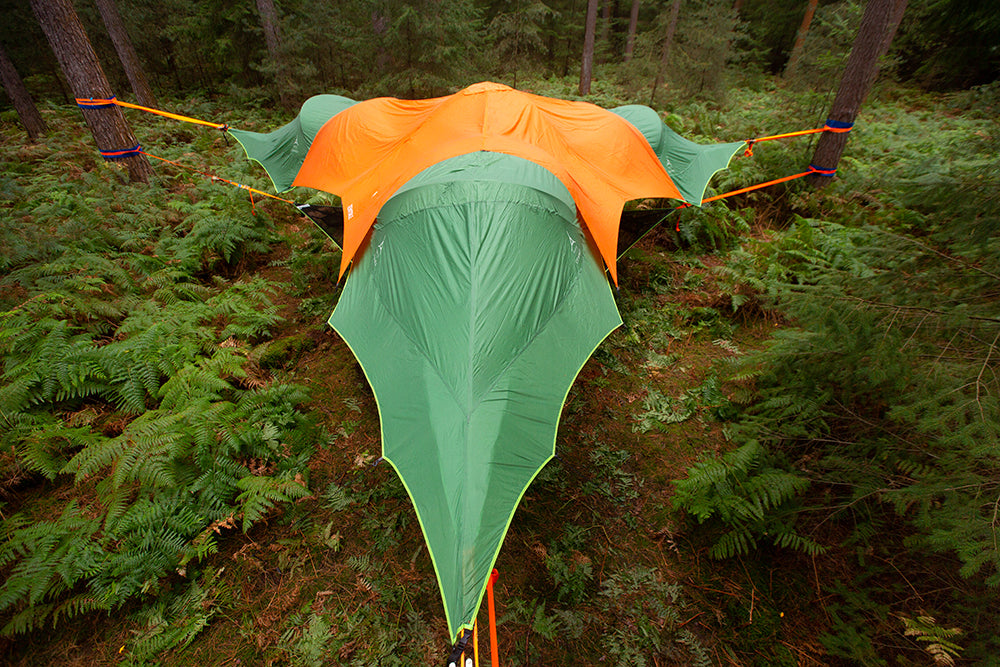
Tentsile is a specialist outdoor brand focused on suspended tree tents, giant camping hammocks and modular accessories. The company describes its products as portable treehouse-inspired shelters combining aspects of a hammock and a multi-person tent.
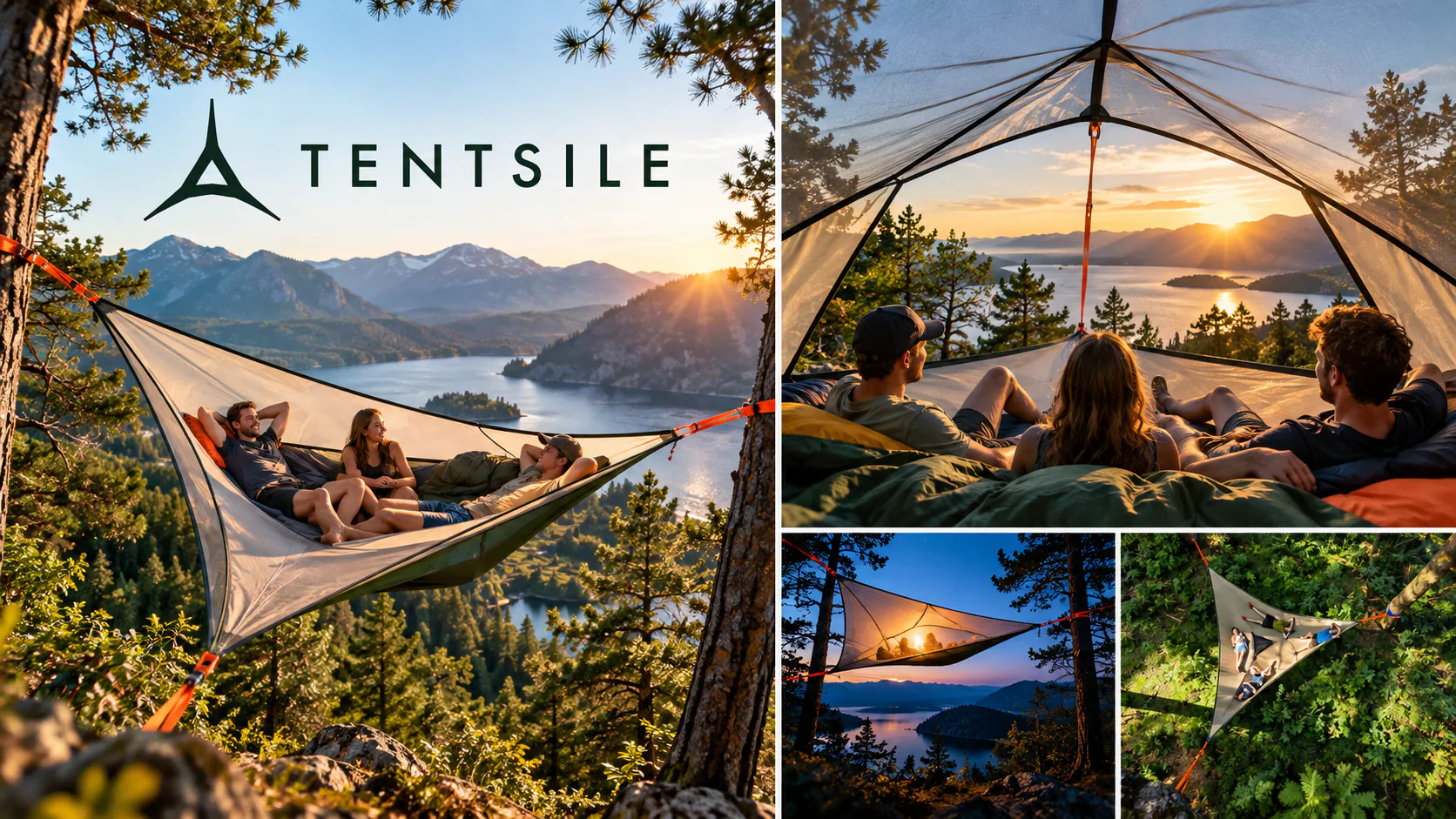
Most core products rely on a triangular three-point anchoring system. Tensioned floors lift occupants away from rough ground, while underfloor straps create separate areas intended to reduce everyone moving toward the center. Covered tree tents add mesh and removable rainflies; open hammocks focus on lounging or can become part of a larger stack.
The brand's origin story centers on architect Alex Shirley-Smith and a portable, low-impact treehouse concept. That positioning explains the catalog, but buyers still need to evaluate the exact product as load-bearing outdoor equipment rather than as a novelty.
What Does Tentsile Sell?
The official range covers one-person hammock tents, two- and three-person tree tents, giant hammocks and larger modular arrangements. Capacity and use vary from lightweight solo or couple-oriented products to family camping shelters and multi-unit stacks.

The Stingray and Safari Stingray serve three-person camping, while Connect-family units cover two-person use. Larger configurations such as Trilogy combine multiple components for group camps. Giant hammocks such as Trillium models provide open suspended platforms without the same enclosed shelter configuration as a tree tent.
Accessories broaden the system. Tentsile sells spare rainflies, replacement straps and ratchets, insect protection, insulation, ground-conversion equipment, ladders, poles and storage components. Compatibility matters: a rainfly or pole set designed for one model or generation should not be assumed to fit another.
The Suspended Camping Concept
A suspended floor avoids direct contact with rocks, mud and uneven ground. It can also make campsites possible where a traditional tent footprint would be uncomfortable. The trade-off is dependence on suitable anchors and correct tension.
Tentsile says the three trees do not need to form a perfect equilateral triangle, but the setup must work within appropriate angles and distances. The company provides a center-point guide, manuals, setup videos and a calculator app. Those resources are part of the product system, not optional reading.
The recommended floor height is about 1.2 meters, or four feet. The official safety terms call for healthy, appropriately sized trees, pre-use inspection of the shelter, straps and ratchets, locked buckles, adherence to weight limits and adult supervision of children. Users should choose a height from which they would feel safe falling.
Product Range and Capacity
Tentsile's range makes capacity selection more nuanced than counting sleeping positions. A one-person model can prioritize packed size, while three-person models create a larger triangular platform. A six-person system may consist of connected units and a central covered area rather than one simple tent body.
Buyers should check the exact weight limit, floor dimensions, packed weight, tree-distance requirements and included components. Group size also changes setup effort: more fabric, longer spans and modular canopies can demand a larger site and more time.
The official tree-tent collection spans products intended for backpacking, couples, families and car camping. These labels help narrow the catalog, but they do not replace checking pack weight and installation needs against the actual trip.
Materials, Rainflies and Weather Protection
Construction varies by product family. The official catalog publishes model-specific UV ratings and hydrostatic-head figures, while product pages explain whether the rainfly is removable and how it can be tensioned. Safari materials generally carry higher published UV and water-resistance ratings than some classic counterparts, but the exact model page governs.
A hydrostatic-head number describes a material test, not complete proof against every storm. Seam condition, fly tension, airflow, exposure, abrasion and age affect shelter performance. Tentsile's warranty guidance also distinguishes manufacturing defects from weather damage, wear, UV degradation and improper maintenance.
Rainflies are removable and replaceable on relevant models. That extends the useful life of the main shelter and supports repair rather than whole-product replacement. Official care guidance says products should be cleaned, dried and stored after use rather than left erected as permanent structures.
Setup and Site Selection
The right site needs three healthy anchors, adequate spacing and a safe area below. Inspect overhead branches, trunk condition, ground hazards and the path of every strap. Tree protectors and responsible strap placement help reduce bark damage.
First-time setup should be practiced before a trip. Tentsile's resources explain how to find the center point, manage non-perfect triangles and balance the floor. Rushing the process can create uneven tension, difficult doors, poor rainfly coverage or unsafe hardware loading.
Suspension changes campsite etiquette. Straps can extend beyond the shelter footprint, so the area should not cross paths or create trip hazards. Local campgrounds may restrict attaching equipment to trees, making prior permission essential.
Comfort and Movement Considerations
The brand's anti-roll straps divide the tensioned floor into separate bays. This design addresses one familiar hammock problem: occupants sliding toward a shared low point. Even so, a suspended platform moves when people enter, exit or change position.
Sleep comfort depends on tension, occupant distribution, insulation and personal preference. Air circulating below the floor can increase heat loss, so cold-weather trips may require underfloor insulation or compatible quilts. Product accessories can solve some needs, but they add cost, bulk and setup steps.
Accessories and the Modular Ecosystem
Tentsile's ecosystem is a practical advantage for owners who want to replace worn parts or expand a setup. The official spares collection includes rainflies for specific tents, straps, ratchets and other repair components. Modular products can also be linked or stacked in supported configurations.
The same ecosystem creates a compatibility burden. Product name, capacity and generation all matter. A Safari Stingray rainfly is not interchangeable with a Trilogy canopy or with a rainfly for an ordinary Stingray unless Tentsile explicitly says so.
Before ordering an accessory, match the exact product title and generation, inspect the current shelter and consult support if the page is ambiguous. This is especially important for load-bearing hardware and weather-critical fabric.
Things to Consider Before Buying
Start with access. Confirm that the places you camp permit tree-mounted shelters and offer suitable anchor spacing. A tree tent can solve uneven-ground problems but is less convenient in treeless areas unless a compatible ground solution is available.
Next, compare transport needs. Some Tentsile products target backpacking, while larger family systems are better suited to car camping or base camps. Include straps, ratchets, rainfly, poles and optional insulation when judging total packed burden.
Read the current warranty and care terms. Tentsile's published policy covers eligible manufacturing defects for qualifying direct purchases, but excludes natural wear, improper use, UV degradation and specified severe-weather damage. Rainflies are consumable textile components whose life depends on exposure and care.
Who Is Tentsile Best For?
Tentsile may suit campers who have reliable access to wooded sites and want to avoid uneven, muddy or rocky ground. It can also appeal to families and groups who value a social suspended platform and are comfortable practicing a technical setup.
The modular catalog is useful for owners who want to begin with one unit and later add compatible hammocks, insulation, insect protection or replacement fabric. Buyers who maintain gear carefully can benefit from the availability of model-specific spares.
Who May Prefer Alternatives?
Campers who frequently use deserts, open fields or highly regulated campsites may prefer a conventional freestanding tent. Solo travelers who prioritize the lowest possible weight may find a simpler hammock or ultralight ground shelter easier to carry and pitch.
Anyone unwilling to inspect trees and hardware, learn tensioning or follow setup-height and load rules should choose a less specialized shelter. Buyers wanting a permanent backyard installation should also look elsewhere because Tentsile says its camping products are not permanent structures.
Ways to Save
The owner supplied no coupon. The supplied brand-level deal is Trilogy 6-Person Tree Tent - $2,613 → $2,090 ($523 OFF / 20% OFF). This deal applies to the Trilogy 6-Person Tree Tent, not to the separate Spare Rainfly selected for Product Review. No researched promotion or additional condition is included.
Pros
- Distinct three-point suspended shelters can avoid uneven, muddy or rocky ground.
- Range spans solo shelters, multi-person tree tents, giant hammocks and modular stacks.
- Model-specific manuals, setup videos and safety resources support the unusual installation process.
- Official spares and replacement rainflies can extend the useful life of compatible shelters.
Cons
- Most setups require three healthy, suitably spaced trees and permission to use them.
- Correct geometry, tension, inspection and hardware handling create a steeper learning curve than many ground tents.
- Suspended floors can move when occupants enter or change position.
- Weather ratings, components and accessory compatibility vary by model and generation.
Final Verdict
Tentsile offers a coherent alternative to ordinary ground camping: tensioned, suspended shelters supported by a mature catalog of sizes, modular components and replacement parts. The design can be rewarding for campers who have appropriate trees and are willing to learn the system.
Its distinctive advantage is also its main constraint. Safe use depends on anchor selection, geometry, inspection, tension and adherence to the manual. Weather ratings and capacity must be read at model level, and accessories require exact compatibility checks.
Tentsile is most compelling for thoughtful campers who value off-ground shelter, group-friendly platforms and repairable equipment. Those seeking instant setup, universal campsites or minimal packed complexity may be better served by a conventional tent or simpler hammock.
FAQ
What is a Tentsile tree tent?
It is a suspended camping shelter using three trees or approved anchor points to tension a platform above the ground. Covered models combine the platform with mesh and a rainfly.
Do the trees need to form a perfect triangle?
No. Tentsile says suitable acute-angle arrangements can work, but spacing, anchor health and strap alignment must follow the model's guidance.
How high should a Tentsile be installed?
The official recommendation is about 1.2 meters, or four feet, and users should choose a height from which they would feel safe falling.
Does every Tentsile product have the same capacity and weather rating?
No. Capacity, load, UV exposure and hydrostatic-head ratings vary by exact model and material family.
Can Tentsile rainflies be replaced?
Yes, Tentsile sells model-specific spare rainflies. The buyer must match the exact tent and generation listed on the product page.
Are Tentsile products permanent structures?
No. Official guidance says they should not be treated as permanent structures and should be cleaned, dried and stored after use.
Was this brand independently camp-tested for this review?
No. This is a research-based Brand Review using Tentsile's official catalog, setup resources, safety guidance and support policies.
What owner-supplied deal is included?
The supplied deal is for the Trilogy 6-Person Tree Tent at $2,090 from $2,613, described as $523 or 20% off. It does not apply to the separately reviewed Spare Rainfly.
Explore the official Tentsile range through the Store CTA while preserving the owner-supplied affiliate destination.