

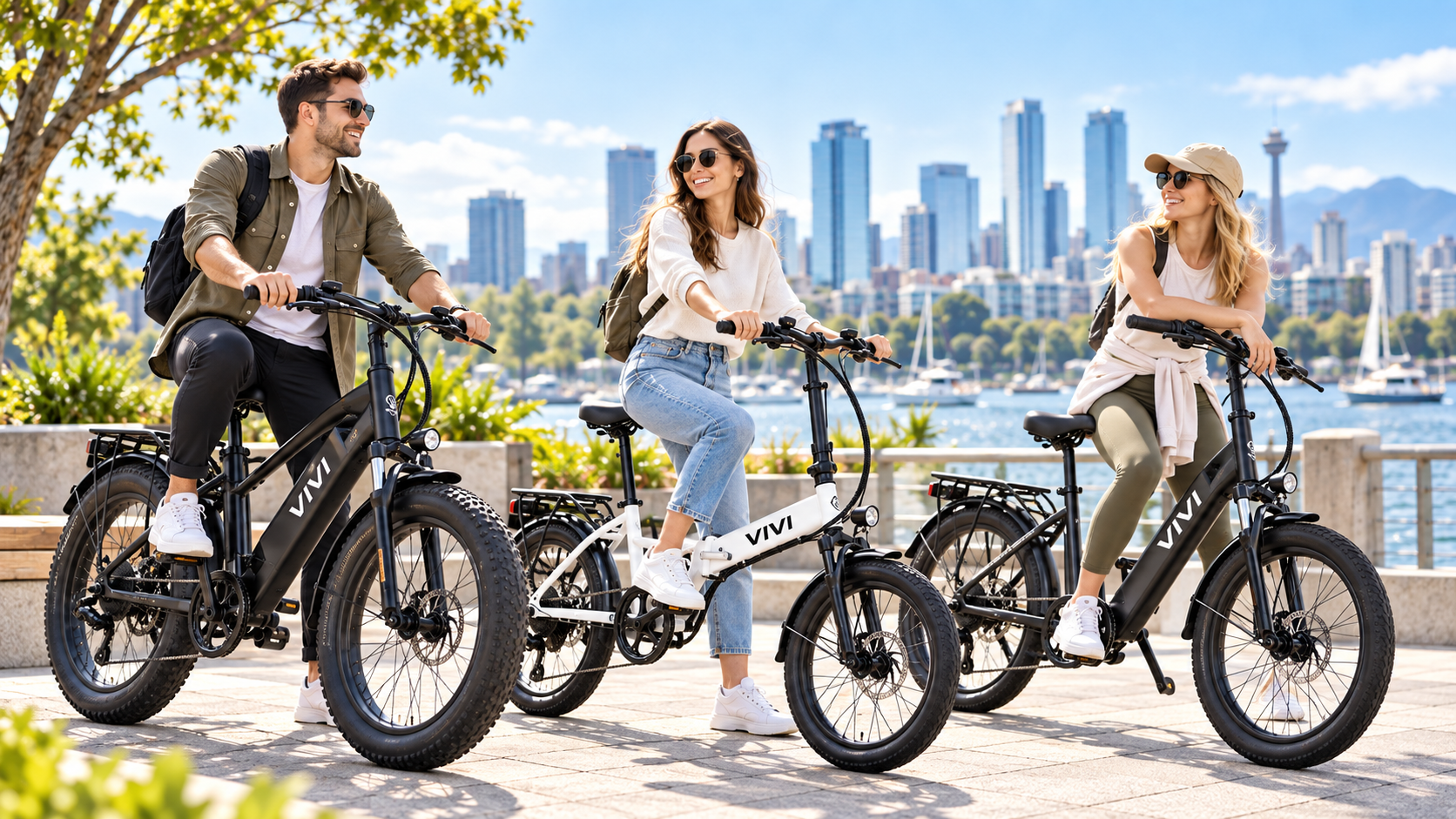
VIVI eBikes Review: Affordable Electric Bikes for Commuting, Leisure and Everyday Riding
Short Verdict:VIVI eBikes is an electric-bike brand built around affordability, variety and everyday practicality. Its catalog covers commuting, leisure, folding and mountain-style e-bikes, with a focus on giving entry-level and value-conscious riders access to electric mobility without moving immediately into premium-bike pricing. The strongest reasons to consider VIVI are its broad model range, straightforward ownership support, safety certification claims and accessible positioning. The main caution is that buyers should compare each model carefully for battery, motor, frame style, fit and local-use requirements rather than assuming every VIVI bike delivers the same experience.
What Is VIVI eBikes?
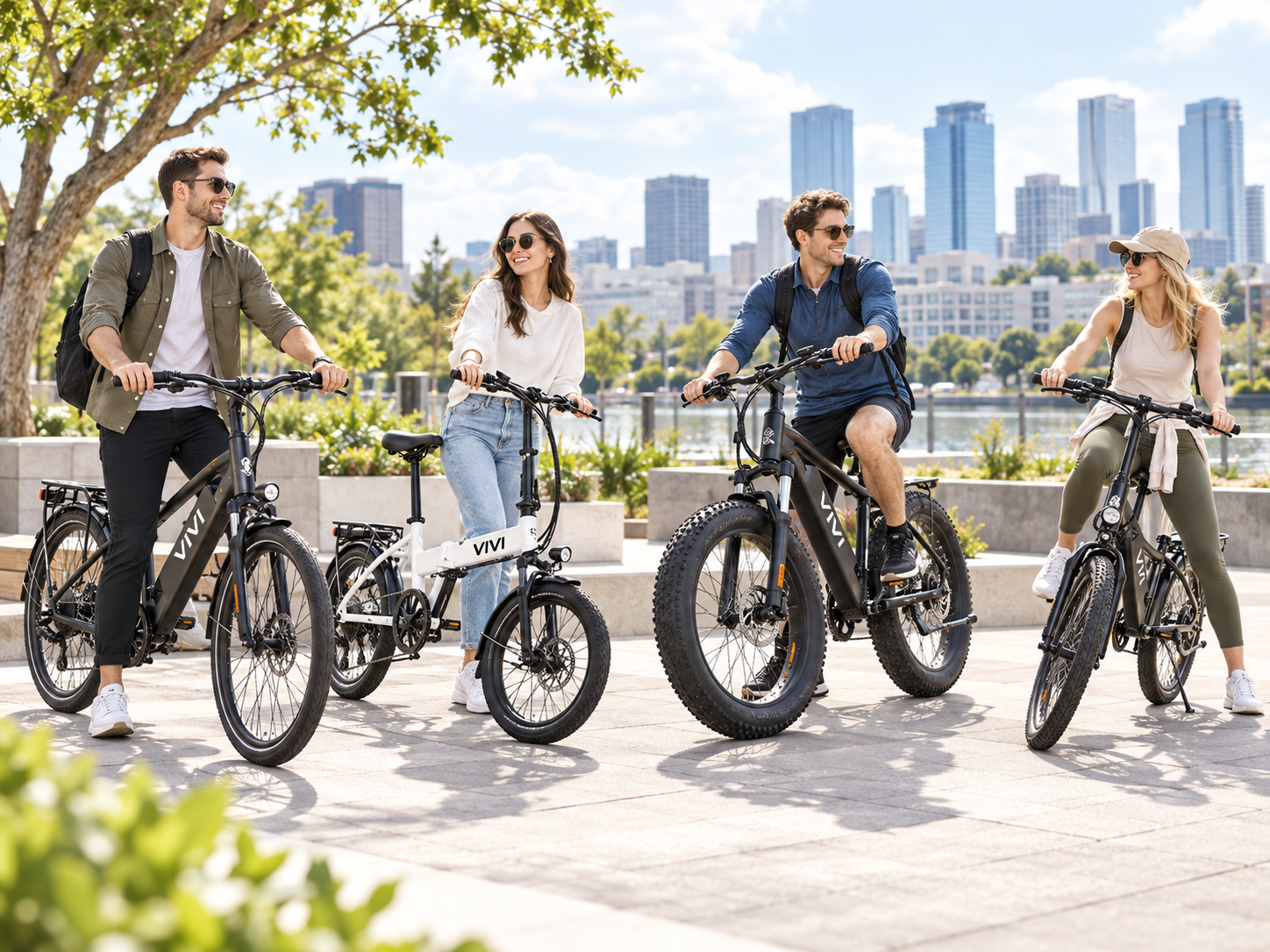
VIVI eBikes is a consumer electric-bike brand focused on making e-bikes available to riders who want practical transportation, recreational riding or light adventure use without paying premium-market prices.
The official VIVI storefront currently presents the brand around several everyday use cases, including commuting, exercise, shopping trips and recreational riding. Its catalog includes multiple electric-bike formats, with the European storefront also listing commuter, folding, fat-tire and hardtail mountain-style models.
That makes VIVI more of a broad-value e-bike brand than a specialist brand built around one flagship frame platform.
The Main Strength: A Wide Range of Bike Formats
The clearest appeal of VIVI is variety.
Instead of offering only one or two frame types, the brand spans several kinds of riders and riding environments.
Depending on region and current inventory, the lineup includes categories such as:
- commuter e-bikes
- folding e-bikes
- fat-tire models
- hardtail mountain-style e-bikes
- step-through or comfort-focused designs
- replacement batteries and related parts
That matters because an e-bike purchase is usually more about fit and intended use than about headline specifications alone.
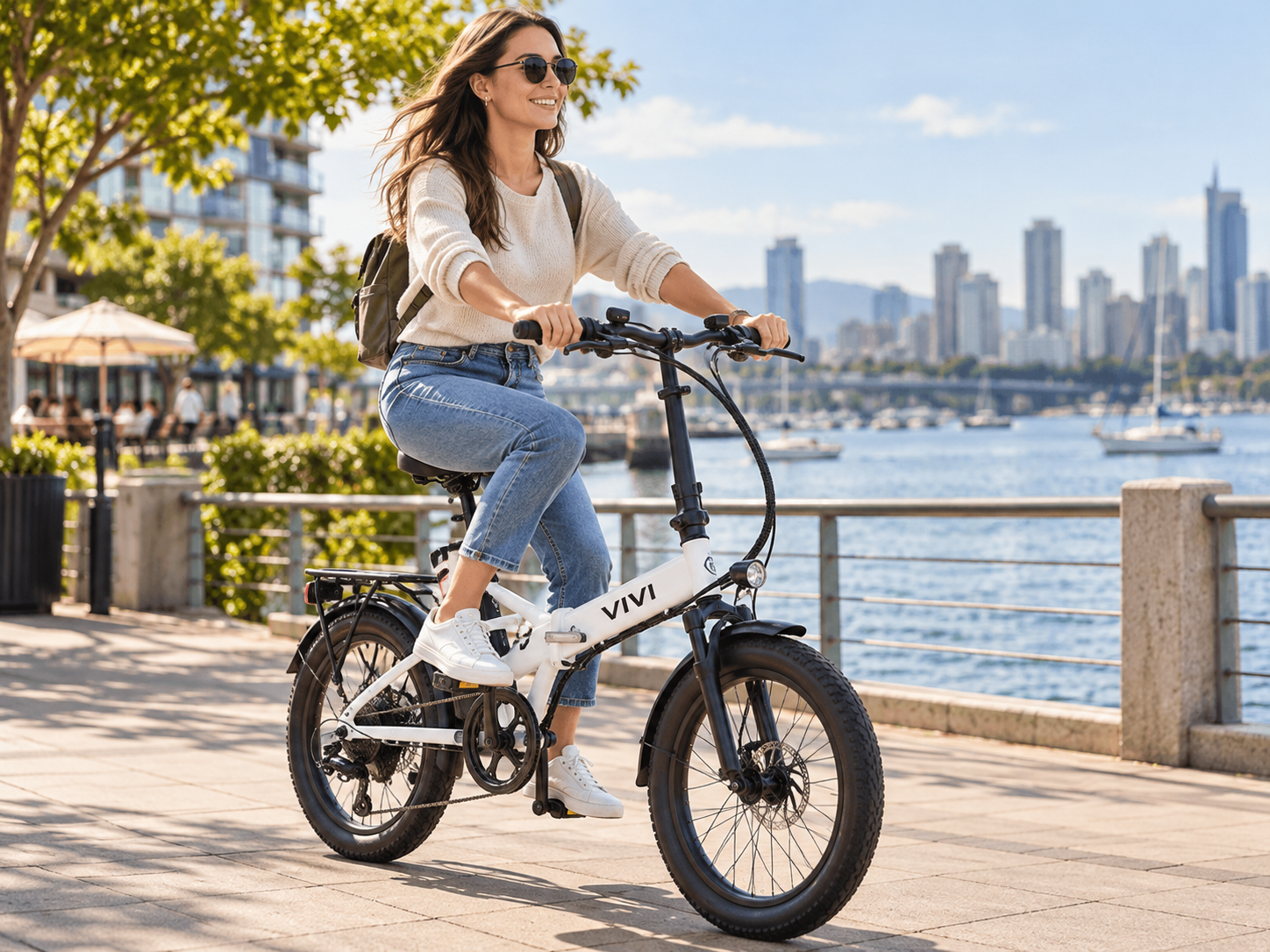
A folding model may make sense for storage and portability.
A commuter model may be better for city errands.
A fat-tire bike may appeal to riders who want more visual presence and a different ride feel.
A hardtail mountain-style model may suit light trails or mixed surfaces better than a compact city bike.
The broad catalog gives buyers options, but it also means careful comparison is important.
Motor and Riding Technology
VIVI’s current U.S. site highlights a self-developed integrated gear motor system and describes it as being designed around smoothness, efficiency, low noise and serviceability.
That sounds promising, but buyers should still treat motor performance as model-specific.
Important things to compare include:
- nominal and peak motor output
- torque
- top assisted speed
- pedal-assist behavior
- throttle availability
- controller tuning
- legal limits in your region
Two VIVI bikes may both carry the same brand name while feeling very different on hills, in traffic or at low speed.
Battery and Range Expectations
Battery specification is one of the most important parts of any e-bike purchase.
With VIVI, shoppers should compare:
- voltage
- amp-hour capacity
- watt-hours
- removable vs integrated design
- charging time
- replacement-battery availability
- real-world range under the rider’s conditions
Range figures should always be treated as estimates rather than guarantees.
Real-world distance can vary significantly depending on:
- rider weight
- terrain
- wind
- tire pressure
- assist level
- throttle use
- temperature
- stop-and-go riding
This is especially important for value-oriented e-bikes, because many buyers focus heavily on headline range numbers without considering the conditions behind them.
Safety Certification
One positive signal is that the VIVI U.S. storefront currently states that its e-bikes have passed SGS certification to UL 2849.
That matters because UL 2849 relates to the electrical systems used in e-bikes.
For buyers shopping in the U.S., safety certification has become increasingly important due to concerns around batteries, chargers and electrical-system quality.
Certification does not make every bike perfect, but it is a more meaningful quality signal than marketing language alone.
Warranty: What Buyers Should Know
VIVI currently provides a 1-year limited warranty on major covered components for the original owner.
The brand’s warranty documentation lists coverage for major items including:
- frame
- fork
- battery
- motor
- controller
- charger
for one year from the original purchase date. Some other parts, including certain controls and drivetrain-related components, have shorter 3- or 6-month warranty periods.
The warranty is generally tied to the original purchaser and includes exclusions for misuse, accidents, improper assembly, modifications, water damage and normal wear.
This is one area where shoppers should read the policy carefully before buying.
Lifetime After-Sales Support
VIVI’s European warranty page states that after the one-year free warranty period, the company continues to provide lifetime after-sales support, although customers may need to pay for parts and shipping after the free-coverage period ends.
That is a useful ownership detail.
For e-bikes, long-term support matters because batteries, controllers, displays and motors are more complex to replace than parts on a conventional bicycle.
Returns and Exchanges
VIVI’s policies vary somewhat by regional storefront, so buyers should confirm the exact terms that apply where they purchase.
The European warranty page states that eligible non-human-damage issues within 30 days may qualify for return, exchange, reissue or refund.
The Italian help page states that returns are subject to a 30-day policy and generally require the product to be unused, unworn, labeled and in the original packaging when the issue is not related to product quality.
The important practical takeaway is:
do not assume “30-day return” means every used e-bike can simply be returned without conditions.
Read the regional policy before ordering.
Local Dealers and Service
Another positive is that VIVI currently maintains a dealer locator and says it is building relationships with bike shops that can assist with test rides, repairs and service.
The company also notes that customers should contact VIVI support before involving a partner store for warranty-related problems.
That suggests the ownership model is still fairly support-team-driven rather than identical to buying from a large traditional bicycle brand with a dense dealer network.
For some shoppers, that will be fine.
For others, local service availability may be a major buying factor.
Assembly and Ownership Considerations
Like many direct-to-consumer e-bikes, VIVI models may require some final assembly after delivery.
That means buyers should be comfortable with tasks such as:
- installing handlebars
- attaching pedals
- checking brakes
- adjusting derailleur indexing
- verifying bolts and torque
- checking tire pressure
- confirming wheel alignment
If you are not comfortable with bike assembly, having a local bicycle mechanic inspect the bike before regular use is a sensible step.
This is especially important with e-bikes because added speed and weight place more demand on brakes, wheels and fasteners.
Who VIVI eBikes Is Best For
VIVI is most relevant to shoppers who want to enter the e-bike market without jumping into premium pricing.
First-time e-bike buyers
A broad catalog and accessible pricing can make VIVI easier to explore than high-end specialist brands.
Commuters
Many of the brand’s models are positioned around daily transport and practical urban use.
Recreational riders
People who want assistance for relaxed weekend riding may find several suitable formats.
Buyers who value choice
The lineup spans different frame styles, wheel formats and riding purposes.
Budget-conscious shoppers
VIVI’s positioning is clearly aimed at value compared with many premium e-bike brands.
Who May Want to Look Elsewhere?
VIVI may be less suitable for riders who prioritize:
- very low bike weight
- premium components throughout
- aggressive trail riding
- advanced suspension systems
- extensive local dealer support
- premium integrated displays and software
- high-end drivetrain or braking hardware
- maximum battery capacity
Riders with very specific performance requirements may prefer a more specialized bike brand.
Pros and Cons
Pros
- Broad range of e-bike styles
- Value-oriented positioning
- Commuter, folding, fat-tire and mountain-style options
- Major electrical components covered by a 1-year warranty
- Replacement batteries and parts available for some models
- Dealer locator available
- UL 2849 certification claim on the U.S. storefront
- Lifetime after-sales support stated on regional warranty materials
Cons
- Model specifications vary significantly
- Some components have shorter warranty periods than the main bike systems
- Return conditions can be stricter than the headline “30 days” suggests
- Warranty generally favors the original purchaser
- Direct-to-consumer assembly may require mechanical confidence
- Local service coverage may vary
- Buyers need to verify regional rules and certification before use
What to Check Before Buying a VIVI eBike
Before choosing a model, compare these items carefully:
- rider height and frame size
- bike weight
- wheel and tire size
- battery watt-hours
- motor output and torque
- brake type
- suspension design
- assist levels
- throttle behavior
- maximum legal assisted speed
- replacement battery cost
- warranty terms
- local service availability
That checklist is more useful than choosing based on appearance or advertised discount alone.
Final Verdict
VIVI eBikes is best understood as a value-focused electric-bike brand offering a broad selection for commuting, leisure and everyday riding.
The company’s strongest points are variety, accessible positioning, practical model choices, safety-certification claims and clearly documented warranty support.
The trade-off is that the buying decision requires more homework.
Different VIVI models can vary substantially in frame design, battery size, motor setup, weight and component quality.
For buyers who compare specifications carefully and choose a bike that genuinely matches their riding environment, VIVI can be an approachable entry into electric cycling.
For riders who expect premium components, very light weight or deep local dealer support, a more specialized e-bike brand may be worth comparing.
The most useful question is not simply:
“Is VIVI a good e-bike brand?”
It is:
“Which VIVI model matches my commute, terrain, storage space and range needs?”
Explore VIVI eBikes