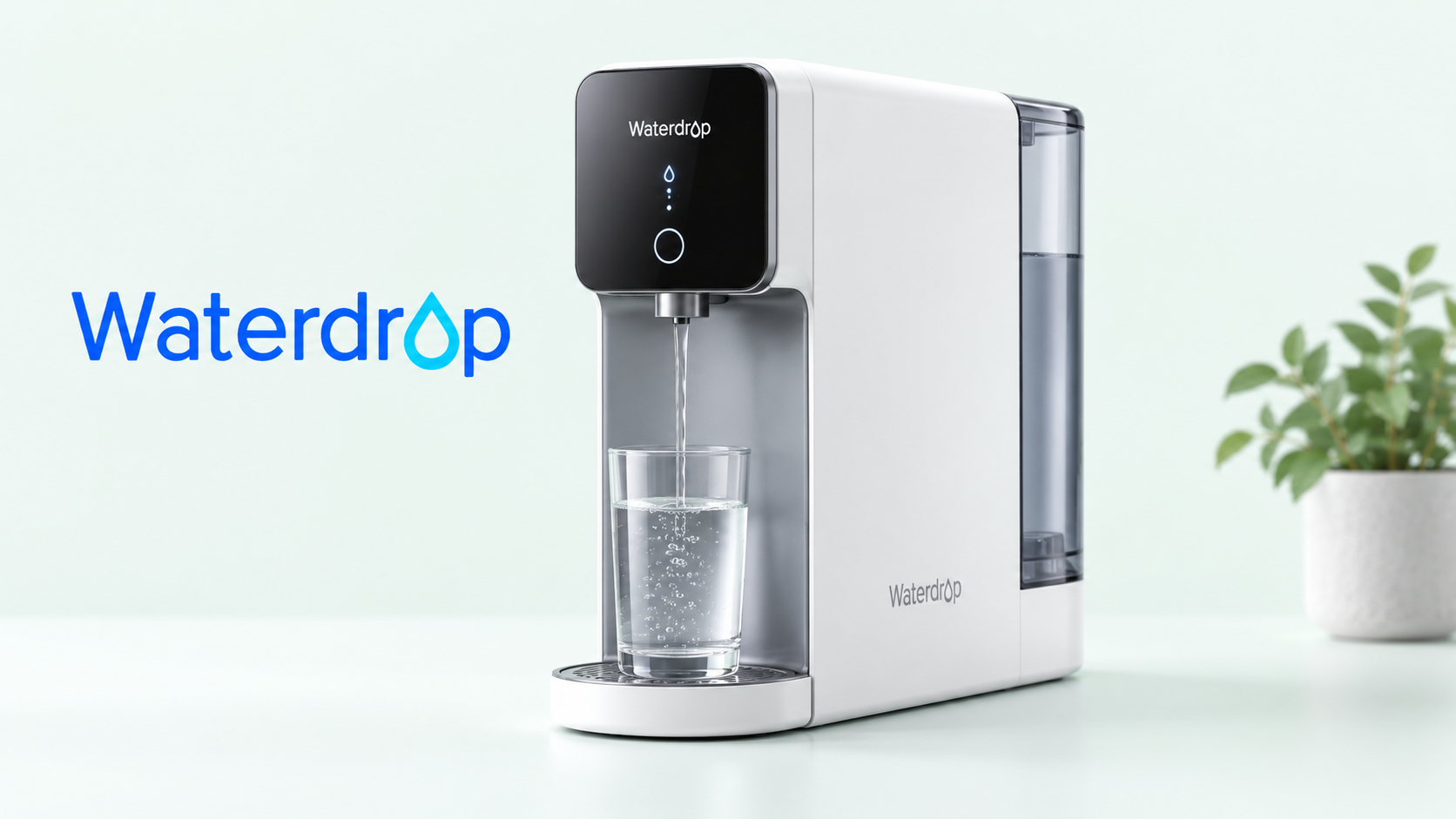
Waterdrop is a water filtration brand that has made reverse osmosis (RO) systems and related water-treatment products since 2015. According to Waterdrop, the company's stated mission is addressing drinking-water contamination - including unregulated contaminants such as PFAS and lead - through its own filtration technology.
What Waterdrop offers
Waterdrop's current lineup spans several water-filtration product families rather than a single product line. According to Waterdrop's own site, these include reverse osmosis systems (countertop, under-sink, and whole-house configurations), remineralization systems that add minerals back into filtered water, general carbon filters, a bottleless water cooler, outdoor water filters, pitcher filters, water softeners, and replacement filters for its own systems.
Reverse osmosis systems
- Under-sink RO systems, sized by GPD (gallons per day) capacity - for example, Waterdrop states its X12 system is rated at 1200 GPD and its G3P600 at 600 GPD
- Countertop RO systems, including models Waterdrop describes as remineralizing and hot/cold dispensing, such as the M6CG
- Instant hot water RO dispensers that combine filtration with an on-demand hot water function, per Waterdrop's product listings
- Whole-house filtration systems for point-of-entry treatment, separate from the under-sink/countertop RO line
Waterdrop states that several of its reverse osmosis systems are tested against NSF/ANSI standards. For example, Waterdrop's own certification pages list the X12 as certified to NSF/ANSI 58 and 372, and the G3P600 as certified to NSF/ANSI 58, 372, and 42&53 - these standards cover different contaminants, including lead, arsenic, fluoride, chlorine, and PFOA/PFOS, according to Waterdrop's published certification comparison.
How the product families differ
The clearest split in Waterdrop's lineup is installation style. Countertop systems (like the M6CG) avoid permanent plumbing changes and can move with a renter, while under-sink systems (like the X12 and G3P600) install beneath a sink and typically offer higher GPD capacity for steadier household demand. Whole-house systems sit apart from both, treating water at the point it enters a home rather than at a single tap.
Who different Waterdrop systems may suit
A countertop system may suit renters or anyone who wants filtered water without modifying existing plumbing. A higher-capacity under-sink system like the X12 may suit larger households that want a fixed, higher-throughput setup. A hot/cold or remineralizing model may suit buyers who specifically want on-demand temperature control or minerals added back after filtration, rather than plain filtered water.
Strengths
Pros
- A broad product range covering countertop, under-sink, and whole-house installation styles under one brand
- NSF/ANSI certification details published per product, covering standards such as 58, 42, 53, and 372 depending on the model
- Waterdrop states fast, free shipping and a 30-day return policy
Cons
- A wide product range can make picking the right specific model less obvious without comparing GPD capacity and certification details directly
- Under-sink and whole-house systems require plumbing access that a countertop unit does not
Choosing a Waterdrop system
Because Waterdrop's lineup is broad, the practical starting point is installation style (countertop vs. under-sink vs. whole-house) and then GPD capacity for household size, followed by checking which NSF/ANSI standards the specific model is certified to for the contaminants that matter most in a given water supply.
Final considerations
Waterdrop is worth considering for buyers who want one brand covering multiple reverse-osmosis installation styles with published NSF/ANSI certification details, as long as the specific model's capacity, certification, and installation requirements are checked against the intended space and water supply.
Shop Waterdrop